Cheer and Dance Fundraising Ideas for Teams and Competition Groups
Published September 23, 2026
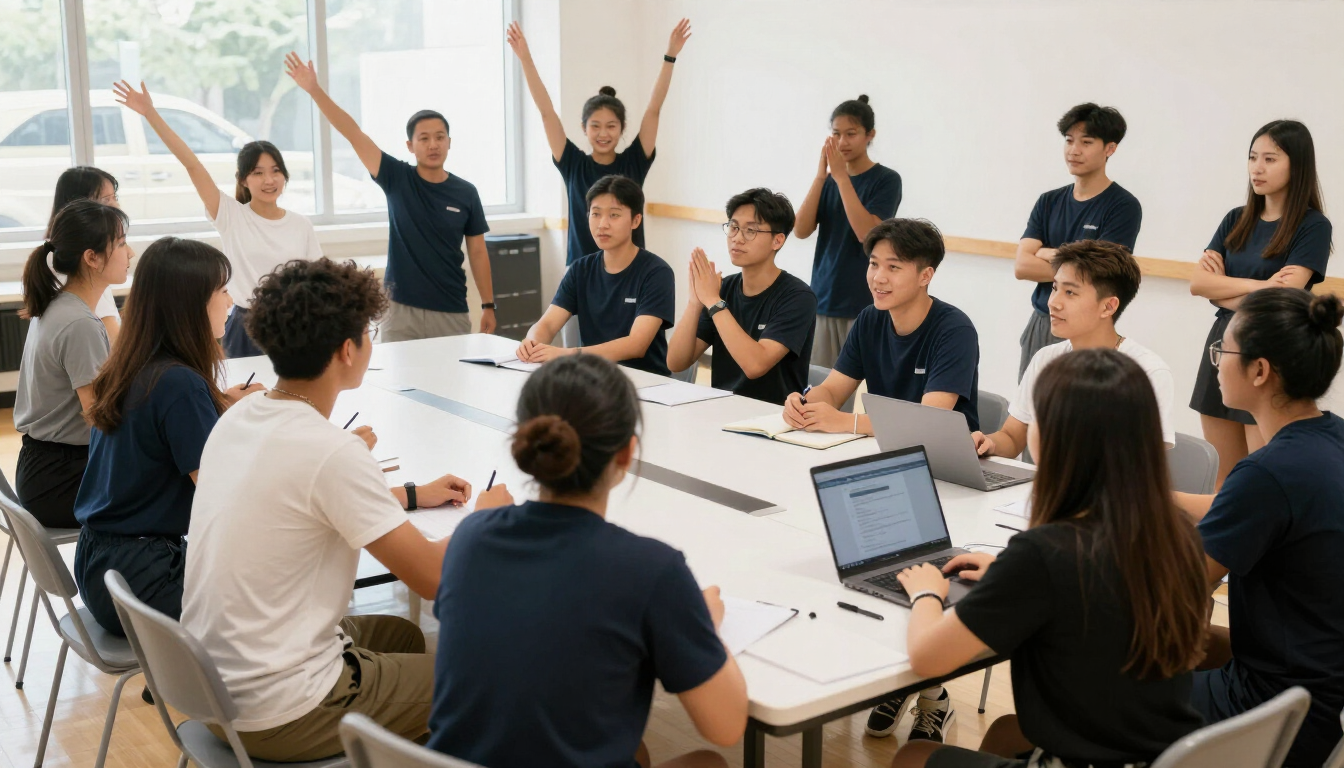
Cheer teams, dance teams, and competition groups raise money for all kinds of expenses, and the right fundraiser depends on what you are raising money for, your competition schedule, your volunteers, your budget, and the people who support you.
Why choosing the right cheer or dance fundraiser matters
A cheer or dance team may be raising money for competition registration fees, uniforms and apparel, travel and lodging, camps and clinics, equipment and supplies, choreography, or general team expenses.
The challenge is rarely a shortage of cheer fundraising ideas. There are hundreds of them.
The real challenge is figuring out which fundraising approach fits your particular team and circumstances.
A small competition team raising money for one regional event has different needs than a large program funding a full season of travel. A brand-new team with a few committed parents faces different pressures than an established program with a booster organization behind it.
This guide is not a giant list of every possible fundraiser. Instead, it helps cheer teams, dance teams, and competition groups choose fundraising opportunities that make sense for their situation.
Cheer and dance teams have unique fundraising needs
Cheer and dance organizations are different from many other groups that fundraise.
Costs tend to cluster around the competition season. A team may face a wave of expenses, registration deadlines, uniform orders, and travel bookings all within a few months.
At the same time, the people who support a cheer or dance team are often a relatively small, close group, mostly parents, relatives, and a handful of local supporters. That shapes which fundraisers are realistic.
Understanding those realities before choosing a fundraiser helps a team avoid overcommitting and avoid wearing out its supporters.
Start with what your team actually needs to fund
Before choosing a fundraiser, get clear about the expense you are trying to cover.
Different needs point toward different fundraising approaches. A one-time competition registration fee is not the same as recurring travel costs throughout a season.
Common cheer and dance fundraising needs include:
- Competition registration fees
- Uniforms and apparel
- Travel and lodging
- Camps and clinics
- Equipment and supplies
- Choreography and related program expenses
- General team expenses
Competition registration fees
Competitions often charge per-team and per-athlete registration fees, and those fees can add up quickly for a squad sending multiple routines or levels to several events.
Because competition fees are usually tied to specific dates and deadlines, a team may need a fundraiser that can be organized on a set schedule and deliver funds before registration closes.
Direct donation campaigns, sponsorships, and simple product sales can work well here because they can raise a set amount toward a known expense without requiring a large event.
Uniforms and apparel
Uniforms, warm-ups, shoes, and performance apparel are often one of the largest upfront costs a cheer or dance team faces. A full set of uniforms for a squad can be a significant expense.
Because uniform costs are usually known in advance and ordered on a schedule, a team can plan a targeted campaign around the order deadline.
Spirit-wear sales and print-on-demand apparel can serve double duty here, raising funds while also building team identity. Just confirm how much the team actually keeps per item before committing.
Travel and lodging
Travel is one of the most common and most expensive fundraising needs for competition teams. Regional and national events can require transportation, hotels, and meals for an entire squad plus coaches and chaperones.
Travel costs tend to recur throughout a season, so look for repeatable fundraisers a team can run more than once as events approach.
Peer-to-peer fundraising, where each athlete raises money from their own contacts, can spread the work and the reach across the whole team. Sponsorships from local businesses can also offset travel costs.
Camps and clinics
Many teams attend summer camps or skills clinics to prepare for the season. Those costs may include registration, housing, and transportation.
Because camp costs are usually planned months ahead, a team has time to run a fundraiser well before the bill is due. Donation campaigns and sponsorships can build funds gradually over the spring.
Equipment and supplies
Cheer and dance teams need mats, music, props, poms, signs, first-aid supplies, and other equipment. Some items wear out and need replacing each season.
Equipment needs can be a good fit for a focused campaign with a clear target, since the cost and purpose are easy to explain to supporters.
Choreography and related program expenses
Hiring choreographers, music editors, and guest instructors is a real and sometimes significant expense for competition teams. These costs are usually planned in advance and tied to the season schedule.
Like equipment, choreography costs have a clear purpose and a known amount, which makes them a good candidate for a targeted donation or sponsorship campaign.
General team expenses
Some teams fundraise for a general budget that covers supplies, end-of-season celebrations, unexpected costs, or a financial cushion for the program.
When the need is general rather than tied to a specific deadline, a team has more flexibility. A well-timed event or campaign can build the team’s overall budget for the year.
A framework for evaluating cheer and dance fundraising ideas
Once you know what you are raising money for, evaluate each fundraising option against the same set of questions.
This framework helps you compare cheerleading fundraising ideas and dance team fundraising ideas honestly instead of choosing an activity simply because another team tried it.
Upfront cost
How much money must the team pay before the fundraiser begins?
Some fundraisers require deposits, inventory purchases, venue rentals, or permits. Others can start with little or no money out of pocket.
For many cheer and dance teams, upfront cost is the most important factor. Low-cost cheer fundraising ideas protect a team from losing money it does not have.
Volunteer requirements
How many volunteers will the fundraiser require, and what will they need to do?
A competition team often relies on a few committed parents and coaches. An event that needs a large crew for setup, food service, and supervision may not be realistic.
Look for fundraising ideas for cheer teams that two or three people can coordinate, or that let supporters help in small, flexible ways.
Planning time
How many hours of planning and execution are involved, and over how many weeks?
Some fundraisers come together in a few days. Others require weeks of preparation and ongoing coordination.
Match the time requirement to what your volunteers can realistically give alongside work, family, and the team’s practice and competition schedule.
Number of participants
How many athletes and families can realistically take part?
Some fundraisers depend on broad participation from the whole team. Others can be run by a small group. Know how many people you can actually count on before choosing an approach.
Supporter base
How many people are likely to participate, donate, or purchase?
A fundraiser built for a large community will underperform if your team can only reach a few dozen families. Choose an idea whose scale fits the audience you can actually reach.
Promotion requirements
How much marketing will the fundraiser need to succeed?
Some activities sell themselves to a close team community. Others require flyers, emails, social media posts, and personal outreach to draw enough participation.
Be honest about whether your team can promote the effort effectively with the time and tools available.
Financial risk
Could the team lose money if the fundraiser underperforms?
Low-cost cheer fundraising ideas carry little financial risk. Ideas that require advance purchases or deposits can leave a team paying for unsold inventory or an empty venue.
For teams with limited funds, protecting against loss matters as much as raising money.
Timing within the competition season
When does the fundraiser need to happen, and does it fit the team’s schedule?
A competition season is demanding. Athletes are practicing, traveling, and performing, and parents are already stretched. A fundraiser that lands the week of a major competition may struggle.
Match each fundraiser to a window when the team has the bandwidth to promote and run it, and make sure funds arrive before the expense they are meant to cover.
Repeatability
Can the team run this fundraiser more than once, or in future seasons?
A repeatable fundraiser can become a reliable part of a team’s plan. One-time events can be valuable, but they should not be the only tool a team relies on.
For recurring needs like travel and competition fees, repeatability is especially valuable.
Cheer and dance fundraising ideas matched to your needs
The categories below are organized around how cheer and dance teams actually use them. Each is evaluated against the framework above so you can judge whether it fits your situation.
No single idea works for every team. Use these as a starting point, then narrow the list based on your volunteers, budget, schedule, and supporters.
Showcases and performance events
A showcase lets a team perform what it has been working on for family, friends, and the community, often with ticket sales, donations, or concessions.
Why it fits cheer and dance teams: it draws on what the team already does well. Athletes perform, and supporters get to see the routines they have been helping fund.
Consider: venue needs, ticket pricing, promotion, and the volunteer effort to run the event. A simple showcase in a school gym or studio can keep costs low.
- Upfront cost: low to moderate
- Volunteers needed: several
- Time commitment: moderate to high
- Financial risk: low to moderate
- Repeatability: high
Clinics and youth workshops
A team can host a clinic or workshop for younger athletes, teaching basic cheer or dance skills and charging a registration fee.
Why it fits cheer and dance teams: it uses the team’s own skills, gives younger participants something valuable, and can be run with the athletes themselves helping instruct under adult supervision.
Consider: whether you have a suitable space, adult supervision, insurance or waiver requirements, and enough younger participants to make it worthwhile.
- Upfront cost: low
- Volunteers needed: a few adults plus athletes
- Time commitment: moderate
- Financial risk: low
- Repeatability: high
Community events
Community events such as family fun nights, festivals, or performances at local gatherings can raise money while building visibility for the team.
Why it can fit: these events can be kept simple and scaled to your audience, and they give supporters a reason to come together.
Consider: volunteer needs for setup and activities, promotion, permits, and whether your supporter base is large enough to attend.
- Upfront cost: varies
- Volunteers needed: several
- Time commitment: high
- Financial risk: moderate
- Repeatability: moderate
Food and restaurant fundraisers
Restaurant spirit nights give a team a percentage of sales on a set night, while food events like cookouts or bake sales can be run by a few volunteers.
Why it fits cheer and dance teams: restaurant nights require almost no upfront cost and little volunteer work, mostly promoting the night to supporters. A simple bake sale or cookout can also work for a close team community.
Consider: how much the team actually receives, attendance, food costs for self-run events, and any permit requirements.
- Upfront cost: usually none for restaurant nights; moderate for self-run food events
- Volunteers needed: one to two for restaurant nights; several for food events
- Time commitment: low to moderate
- Financial risk: low to moderate
- Repeatability: high
Product and spirit-wear fundraising
Spirit-wear and custom apparel let supporters show team pride while raising funds. Print-on-demand programs let a team sell custom items online without buying inventory upfront.
Why it fits cheer and dance teams: spirit-wear builds team identity and can be promoted easily to families. Print-on-demand options carry little financial risk because items are made only after they are ordered.
Consider: how much the team keeps per sale, shipping costs, delivery timelines, and whether traditional product sales fit your supporters better. Read the terms carefully.
- Upfront cost: often none for print-on-demand; varies for traditional product sales
- Volunteers needed: one to two for promotion
- Time commitment: low to moderate
- Financial risk: low for print-on-demand; depends on the program for traditional sales
- Repeatability: high
Donation campaigns
A direct donation campaign asks families and supporters to give toward a specific team need without selling a product or hosting an event.
Why it fits cheer and dance teams: there is typically no upfront cost, no inventory, and no venue. One or two people can set up an online giving page and share the link with families.
Consider: how clearly you can explain what the money supports, and how many supporters you can reach through email, text, and social media.
- Upfront cost: usually none
- Volunteers needed: one to three
- Time commitment: low to moderate
- Financial risk: very low
- Repeatability: high
Local business sponsorships
Local businesses may sponsor a team, event, or competition season in exchange for recognition on apparel, programs, signage, or social media.
Why it fits cheer and dance teams: a single sponsorship can provide meaningful support without requiring a large event. The work is mostly relationship-building.
Consider: whether your team can offer genuine visibility in return, and whether someone is willing to make the asks. Sponsorships can also recur season after season.
- Upfront cost: none
- Volunteers needed: one to two for outreach
- Time commitment: moderate
- Financial risk: low
- Repeatability: high
Pledge and activity-based fundraising
Pledge-based activities build around movement or a challenge, such as a stunt-a-thon, dance-a-thon, skills challenge, or fitness challenge, where supporters pledge per repetition or make a flat donation.
Why it fits cheer and dance teams: these activities use skills the team already practices, can be scaled to the number of athletes, and often require little upfront cost.
Consider: how you will collect and track pledges, whether you have a location, and how to keep the activity safe and age-appropriate.
- Upfront cost: low to moderate
- Volunteers needed: a few for coordination
- Time commitment: moderate
- Financial risk: low to moderate
- Repeatability: high
Seasonal fundraising
Seasonal fundraisers tie an activity to a time of year, such as a holiday gift wrap sale, spring clinic, or summer camp preview event.
Why it can fit: seasonal events give supporters a natural reason to participate and can become traditions your team community looks forward to.
Consider: timing around the competition schedule, volunteer availability during busy seasons, and whether the effort can be repeated in future years.
- Upfront cost: varies
- Volunteers needed: several
- Time commitment: moderate to high
- Financial risk: moderate
- Repeatability: high
How to avoid fundraising fatigue on your team
Cheer and dance teams are especially vulnerable to fundraising fatigue.
The same parents, relatives, and supporters tend to be asked again and again throughout a competition season. Travel, uniforms, competition fees, and end-of-season costs can pile up into one request after another.
Over time, even supportive people can grow tired of repeated requests. Fundraising fatigue can quietly reduce participation, strain relationships, and make every future ask harder.
Build a fundraising calendar around the season
Instead of fundraising reactively whenever a bill arrives, plan a simple fundraising calendar around the competition season.
A calendar helps you space out activities so families are not hit with back-to-back requests. It also helps you match fundraisers to deadlines, such as uniform order dates, registration closings, and travel deposits.
Even a basic calendar with a few planned efforts can protect supporter relationships and reduce last-minute scrambling.
Vary the types of fundraisers
Asking the same families to buy the same product every season gets old fast.
Vary the types of fundraisers you offer. Mix donation campaigns, sponsorships, spirit-wear sales, restaurant nights, and occasional events so supporters are not always being asked in the same way.
Variety keeps participation fresh and reaches different supporters through different channels.
Coordinate fundraising around major expenses
Line up each fundraiser with the expense it is meant to cover, and give supporters a clear reason for the ask.
When families know a donation campaign is funding competition registration and a spirit-wear sale is helping with uniforms, the requests feel purposeful instead of endless. Coordinating around major expenses also helps you avoid asking for the same thing twice.
Give supporters breaks between campaigns
Supporters need breathing room.
Build quiet stretches into your fundraising calendar where no asks are made at all. A break between campaigns lets families recover and keeps future requests from feeling constant.
A team that runs a few well-spaced fundraisers per season may raise more, and preserve more goodwill, than one that asks for something every week.
Fewer, better-planned efforts often win
Sometimes fewer, better-planned fundraising efforts make more sense than continuously asking families for money.
A competition team that runs a few well-chosen fundraisers per season may raise more, and preserve more goodwill, than one that asks for something every week.
How to choose the right fundraiser for your team
Before saying yes to an opportunity, bring the decision back to your team.
Ask:
- What specific expense are we trying to cover?
- How much do we need to raise, and by when?
- Who are our supporters, and what would they actually participate in?
- How many volunteers do we realistically have?
- What can we afford upfront?
- Does this fundraiser fit the competition schedule and our families’ schedules?
- Can we repeat this fundraiser in future seasons?
- Would our own families participate if another team invited us to it?
Would your own families participate?
There is one more question worth asking.
Would we participate in this fundraiser if another team invited us to it?
If your own athletes and parents are not enthusiastic about the idea, convincing supporters may be difficult.
Related fundraising guidance for teams and small groups
Cheer and dance teams share a lot with other youth sports programs. If your team also supports athletes across multiple sports, our guide to choosing the right fundraiser for a youth sports team walks through needs-based fundraising for uniforms, tournament fees, travel, and facility costs, plus a framework for evaluating fit.
If your competition group is small and working with a tight budget, our guide to fundraising ideas for small groups with little or no upfront cost covers low-risk options that a few volunteers can coordinate without spending money upfront.
Help shape future fundraising opportunities in the DMV
PartnerRaise is building a network of organizations and organized groups throughout Washington, DC, Maryland, and Virginia, and that includes cheer teams, dance teams, and other organized competition groups.
We are listening first.
We want to understand what types of fundraising opportunities organizations would actually find useful before developing them.
Partner Organizations can tell us:
- What types of fundraising opportunities interest them
- Which days generally work best
- Which months generally work best
- What fundraising ideas they would like PartnerRaise to explore
No cost, no obligation
There is no cost to become a Partner Organization.
Joining the PartnerRaise network does not obligate your cheer team, dance team, or competition group to participate in future fundraising opportunities.
Joining also does not guarantee participation in any particular future opportunity. PartnerRaise is currently gathering information about the types of opportunities organizations would find useful, and the goal is simple: bring organizations together, listen to what they need, and use that information to help shape future opportunities.
Key takeaways
- The right cheer or dance fundraiser is the one that fits your expense, competition schedule, volunteers, budget, and supporters.
- Start with what you are trying to fund, then match a fundraising approach to that need.
- Evaluate every option against upfront cost, volunteers, planning time, number of participants, supporter base, promotion, financial risk, timing within the competition season, and repeatability.
- Low-cost cheer fundraising ideas such as donation campaigns, restaurant spirit nights, local business sponsorships, and print-on-demand spirit-wear can be strong starting points for teams with limited resources.
- Avoid fundraising fatigue by building a fundraising calendar around the season, varying the types of fundraisers, coordinating around major expenses, and giving supporters breaks between campaigns.
- There is no cost to join PartnerRaise, and joining does not obligate your team or competition group to participate in future opportunities.
Frequently asked questions
What are the best cheer fundraising ideas?
The best cheer fundraising ideas are the ones that fit your expense, competition schedule, volunteers, budget, and supporters. Donation campaigns, restaurant spirit nights, local business sponsorships, and print-on-demand spirit-wear are strong starting points because they typically require little or no upfront cost and few volunteers.
How do I choose a fundraiser when our dance team has only a few volunteers?
Look for dance team fundraising ideas that one or two people can coordinate. Direct donation pages, restaurant spirit nights, sponsorship outreach, and print-on-demand apparel usually need fewer volunteers than events that require setup, food service, and supervision.
What are good cheer competition fundraising ideas?
Cheer competition fundraising ideas that work well include direct donation campaigns aimed at registration fees, local business sponsorships, and pledge-based activities such as a stunt-a-thon or skills challenge. Because competition fees are tied to deadlines, choose fundraisers that deliver funds before registration closes.
Are there low-cost cheer fundraising ideas with no upfront cost?
Yes. Direct donation campaigns, restaurant spirit nights, local business sponsorships, and print-on-demand spirit-wear can often start with little or no upfront cost. Teams should still confirm the full cost structure and how much they actually keep before committing to any program.
How can a cheer or dance team avoid fundraising fatigue?
Build a fundraising calendar around the competition season, vary the types of fundraisers you offer, coordinate each fundraiser with the expense it covers, and give supporters breaks between campaigns. Fewer, better-planned fundraisers often raise more and preserve supporter relationships better than constant asks.
How do we fundraise for travel and lodging without overwhelming families?
Travel costs recur throughout a season, so use repeatable fundraisers you can run more than once as events approach. Peer-to-peer fundraising spreads the work across the whole team, and sponsorships can offset larger costs. Space the asks out so the same families are not hit repeatedly.
How much money can our cheer or dance team expect to raise?
Results vary widely depending on the fundraiser, the size of your supporter base, the effort involved, and many other factors. No fundraiser can guarantee specific earnings. Choose an approach that fits your team, set a realistic target, and track your progress.
Does joining PartnerRaise cost anything or obligate our team to participate?
No. There is no cost to become a Partner Organization, and joining does not obligate your cheer team, dance team, or competition group to participate in future fundraising opportunities. Joining also does not guarantee participation in any particular future opportunity. PartnerRaise is currently gathering information about the types of opportunities organizations would find useful.
Become a Partner Organization
There is no cost to join and no obligation to participate in future opportunities.
Become a Partner Organization